For patients

Gi外科クリニック岡山院の建物上部にあるロゴ・院名


To patients undergoing surgery at Gi Surgical Clinic, we want to ensure you’re well-informed about the procedure and what to expect. Please review the information below and feel free to ask our staff any questions during your visit.

### About Surgery at Gi Surgical Clinic
We have compiled a 10-minute video summarizing the treatment and surgery for inguinal hernia performed at Gi Surgical Clinic. Please watch this video to understand the procedure we offer for inguinal hernia treatment.

For information on anesthesia, please visit the following link:

### Preparing for Surgery
Here are some guidelines and frequently asked questions about preparing for surgery. Please follow these instructions to ensure a smooth process:

– You may eat normally until the day before surgery, but please moderate your alcohol intake. It is crucial to quit smoking after the surgery date is set due to its negative impact on surgery and recovery.
– From the morning of your surgery, you should fast. Drinking water (tea, water) in small amounts is allowed up to three hours before surgery.
– You may drive yourself to the clinic, but you will not be allowed to drive post-surgery. We recommend using public transport or having a family member accompany you.

### After Surgery
Please note the following points for your recovery after surgery:

– The surgeon will check in via phone to monitor your progress. Don’t hesitate to discuss any concerns. You’ll be asked to rate any pain you’re experiencing on a five-point scale.
– On the day of discharge, you may shower. Normal bathing can resume shortly after. A waterproof sheet will protect your navel incision, so there’s no need to worry.
– No need for wound disinfection. The waterproof sheet can be removed at your next visit, or earlier if it causes discomfort (wounds typically close within 48 hours).
– Normal eating and bathroom use can resume immediately.
– Depending on individual recovery, return to work or school might be possible the next day or shortly after. Recovery varies by individual, which may affect the timing of returning to social activities.
– Avoid strenuous activities immediately after discharge. You may gradually start intense physical activities about two weeks post-surgery, depending on how you feel.

Follow-up visits are generally scheduled for one week, one month, six months, and twelve months post-surgery. Adjustments can be made for those who live far away or have difficulties attending.

### Clinical Research
Gi Surgical Clinic conducts clinical research to provide the best possible care. For details on our clinical research, please see the provided information.

For any questions or concerns at any stage, do not hesitate to reach out to us. Our priority is to ensure you feel supported and informed throughout your treatment and recovery process.

Flow

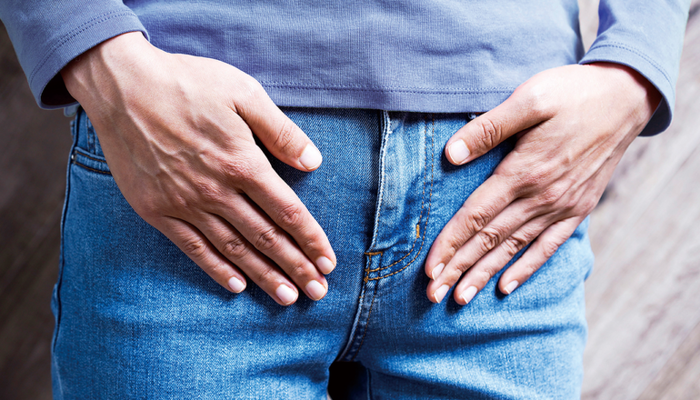
鼠径部を抑えているイメージ画像


“The treatment process for inguinal hernia, from the first visit through to post-surgery, is streamlined for efficiency and patient convenience, especially for those undergoing Day Surgery. Here’s an overview of what to expect:

### First Visit
– **Schedule:** Monday to Friday, 2:00 PM to 6:00 PM.
– **Process:** Comprehensive consultation and examination to determine eligibility for Day Surgery, including necessary pre-operative tests (blood tests, X-rays, ultrasound, ECG). A tentative surgery date is set.

### Second Visit
– **Schedule:** Monday to Friday, 2:00 PM to 6:00 PM.
– Based on initial diagnosis, a treatment plan is chosen. Surgery details are explained, and upon agreement, a consent form is signed, finalizing the surgery date. Detailed instructions for preparation and post-surgery care are provided.

### Period Leading up to the Surgery
– Normal diet is advised until the day before surgery, with moderation in alcohol consumption and cessation of smoking due to its adverse effects on surgical and post-operative outcomes.

### Day of Surgery
– **Before Arrival:** Fasting from the morning, with limited drinking allowed up to three hours before surgery. While driving to the clinic is permissible, post-surgery driving is not, hence arranging for a companion or using public transport is advised.
– **Pre-Operation:** Change into surgery attire, followed by anesthesia in the operating room, which you will walk into.

### Surgery
– The procedure typically lasts about an hour. Post-surgery, you will be moved to a recovery area while still in bed for safety.

### Post-Surgery
– Once awake, hydration and light meals are introduced. Most patients are able to walk and use the restroom independently. Pain management is provided as needed.
– A final consultation with the surgeon offers surgery results and discharge approval, based on a 12-point criteria ensuring readiness for home recovery.

### Returning Home
– Normal diet resumes post-discharge, with pain controlled by oral or suppository analgesics. A 24-hour contact line ensures ongoing support.

### Day After Surgery
– A follow-up call from the surgeon checks on your recovery, with an opportunity to address any concerns.

### Follow-Up
– Showering is allowed immediately, with regular bathing resuming shortly after. The waterproof dressing over the navel incision requires no special care and can be removed during a follow-up visit or sooner if discomfort occurs.
– Normal activities, including bathroom use, can resume, with a return to work or school possible the following day or soon after, depending on individual recovery.

### Scheduled Follow-Up Visits
– Typically, follow-up visits are scheduled for one week, one month, six months, and twelve months post-surgery, with adjustments made for those living far away or with difficulties in visiting.

Inguinal hernia Day Surgery prioritizes reducing hospital visits, emphasizing the importance of building a strong communication and trust relationship with each patient. Feel free to raise any concerns or questions at any stage of the treatment process.”


Merits

患者様に鼠径ヘルニアの説明する医師のイメージ図


Day Surgery offers a range of benefits for those undergoing procedures like inguinal hernia repair, integrating medical care seamlessly with everyday life. Here are some highlighted advantages:

Advantages of Day Surgery for Inguinal Hernia

– **Integrates with Daily Life:** With Day Surgery, there’s no lengthy wait for hospital admission, making it easier to plan around your daily routine and significantly shortening the downtime.
– **Avoids Hospital Stay Inconveniences:** There’s no need for the preparation and arrangements typically associated with overnight hospital stays, reducing the logistical burden on patients and their families.
– **Lowers Healthcare Costs:** By eliminating the need for overnight stays, Day Surgery can substantially reduce the total cost of medical care, with potential savings of approximately 20-50%.
– **Reduces Psychological Stress:** The absence of a hospital stay means less disruption to personal and professional responsibilities, alleviating the mental and emotional stress often associated with surgery.

Who Benefits Most from Day Surgery

Day Surgery is especially beneficial for:

– Those with demanding jobs who find it challenging to take extended leave.
– Individuals who wish to minimize the impact of their surgery on their family’s routine.
– People preferring to recover in the comfort and privacy of their own home.
– Self-employed professionals keen on a swift return to work.
– Caregivers who can’t afford to take time away from their caregiving duties.

When Day Surgery Might Not Be the Best Option

There are instances where Day Surgery may not be suitable, such as:

– For individuals with significant health conditions like advanced diabetes or heart disease, though stable patients may be eligible based on a thorough pre-operative assessment.
– Patients who prefer or require an inpatient stay for recovery. For these patients, collaborations with hospitals ensure that a suitable inpatient option is available.

Safety is the top priority, and not all patients will be candidates for Day Surgery. The decision between Day Surgery and a short-term hospital stay depends on each patient’s unique health status and needs. If inpatient surgery becomes necessary, affiliated hospitals can provide the required care, ensuring a safe and effective treatment pathway.


If you suspect an inguinal hernia

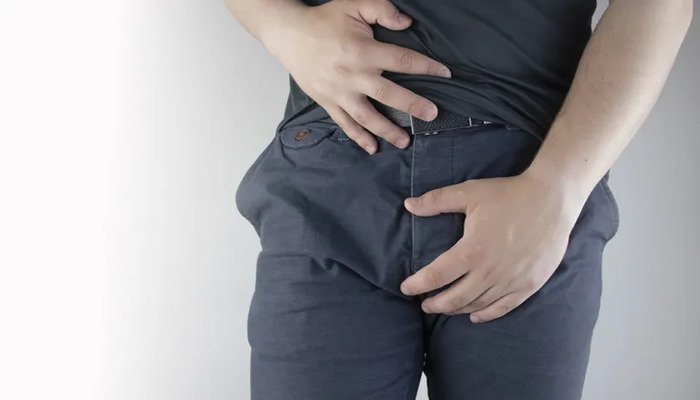
鼠径部を抑えている状態


If you suspect an inguinal hernia due to a lump or pain in the groin area, it’s essential to understand the potential signs and steps you should take. Here’s what you should know and do:

### Signs You May Have an Inguinal Hernia

– A soft bulge in the groin area that disappears when you lie down or can be pushed back in.
– A general feeling of discomfort or unease in the lower abdomen.
– Pain or discomfort in the lower abdomen when standing for long periods.
– Occasional sharp pains.
– A sensation of bloating in the abdomen.

Conditions That May Cause Groin Pain

While inguinal hernias are a common cause of groin pain, other conditions such as lymphangitis or endometriosis (in women) could also be the culprits. Lymphangitis involves inflammation due to a bacterial infection in the lymphatic system, and endometriosis involves the growth of uterine lining tissue outside the uterus, which can cause pain in the groin area.

Checking for Hernia Symptoms
If you notice a bulge in the groin area, especially one that becomes more prominent when you cough, bend, or lift heavy objects, it might be an inguinal hernia. This bulge often retracts when lying down or can be gently pushed back in.

Risks of Ignoring a Hernia: Incarceration
Ignoring a hernia can lead to serious complications. One such complication is incarceration, where the protruded part of the intestine gets trapped and can’t retract back into the abdomen. This condition can cut off the blood supply to the trapped intestine, leading to tissue death and, potentially, perforation, which can cause peritonitis (inflammation of the abdominal lining) and necessitate emergency surgery.

What to Do If You Suspect an Inguinal Hernia

1. **Seek Medical Advice:** If you experience any of the symptoms described, especially a noticeable bulge in the groin area, it’s crucial to consult a healthcare provider for a proper diagnosis.
 
2. **Avoid Straining:** Until you receive medical advice, avoid activities that could exacerbate the hernia, such as heavy lifting, strenuous exercise, or any activity that increases pressure in the abdominal area.

3. **Monitor Symptoms:** Keep track of any changes in your symptoms, especially if the bulge becomes painful or you cannot push it back in. These changes could indicate incarceration or strangulation of the hernia, requiring immediate medical attention.

In conclusion, while inguinal hernias are common and often treatable, they should not be ignored. Early detection and treatment are key to preventing complications and ensuring a quick recovery.


Treatment

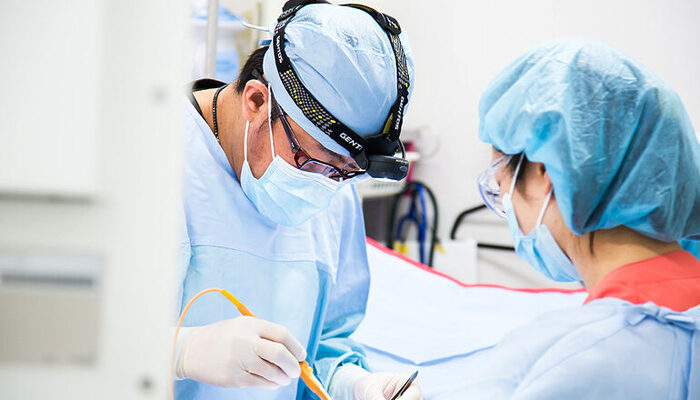
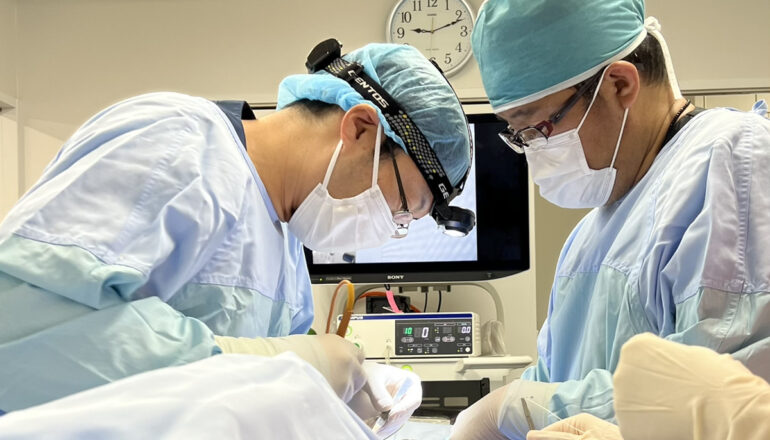
手術中の医師と看護師


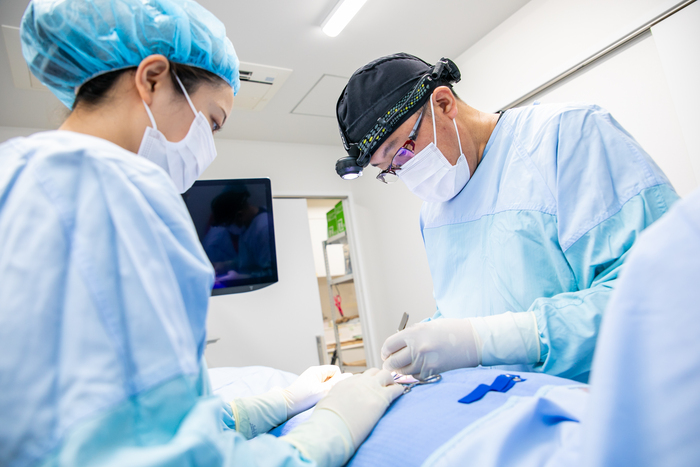
Inguinal hernia treatment is exclusively surgical, as hernia belts or trusses, while temporarily preventing herniation by compression, do not address the root cause and are ineffective once removed. The primary goal of inguinal hernia surgery is to return the protruded intestines back into the abdomen and reinforce the area of herniation with a medical mesh, typically made from a safe and long-used material called polypropylene.

There are two primary surgical approaches for inguinal hernia repair:

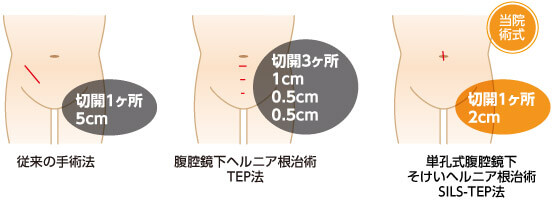
1. **Open Inguinal Hernia Repair:** This method involves making a 5-6 cm incision in the groin area to directly access and repair the hernia.
2. **Laparoscopic (Minimally Invasive) Surgery:** This approach uses smaller incisions and a camera to guide the surgery, resulting in less damage to the body and potentially quicker return to daily activities.

At Gi Surgical Clinic, we prioritize minimally invasive laparoscopic techniques due to their benefits in reducing damage to the patient’s body.

Among laparoscopic methods, two main techniques are utilized:

1. **Transabdominal Preperitoneal (TAPP) Approach:** This involves entering the abdominal cavity and repairing the abdominal wall from the inside.
2. **Totally Extraperitoneal (TEP) Approach:** This method repairs the abdominal wall from outside the abdominal cavity, avoiding the need to enter the abdominal space.

While traditional laparoscopic surgery may require three small incisions, Gi Surgical Clinic has advanced its approach to offer an even less invasive option: **Single Incision Laparoscopic Surgery-Total Extraperitoneal (SILS-TEP)** method. This technique involves making only one small incision inside the navel, minimizing scarring and potentially allowing for an even quicker recovery.

Performed under general anesthesia, the SILS-TEP surgery typically takes about an hour, with patients often able to walk within hours post-operation and possibly resume household and work activities the following day. This method is associated with minimal complications and a very low recurrence rate, making the navel scar almost imperceptible after healing.

Gi Surgical Clinic is dedicated to providing the SILS-TEP method as an outpatient procedure, enabling patients to return home the same day of their surgery. We believe this approach best supports our goal of facilitating a rapid return to society for our patients, combining the benefits of minimally invasive surgery with the safety and efficiency of the TEP technique and the innovative advantages of the SILS method.


Inguinal hernia

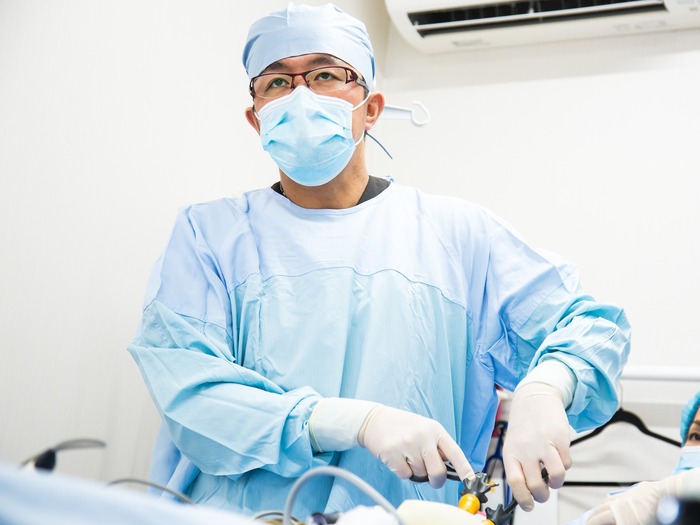
手術中の医師・看護師


Inguinal hernia, commonly referred to as a “hernia,” affects an estimated 400,000 to 500,000 people annually. However, only about 120,000 patients undergo surgery. This indicates that many people live with inguinal hernias without seeking treatment.

Inguinal hernias are often overlooked because the swelling at the base of the leg can be pushed back into place and doesn’t significantly interfere with daily activities due to its benign nature. Nevertheless, ignoring the symptoms can lead to a condition known as “incarceration,” where the protruded intestine cannot be retracted back. This can cut off the blood flow, leading to a critical state that could be life-threatening.

What is an Inguinal Hernia?
An inguinal hernia occurs when the intestine or other abdominal contents bulge through a weak spot in the abdominal muscles around the groin area.

Inguinal hernias can affect people of all ages, from infants, mostly due to congenital factors, to the elderly. In adults, muscle weakness due to aging is a common cause, especially in men over 40.

The evolution of bipedalism in humans has placed additional pressure on the lower abdomen, causing organs and tissues to push through gaps between the muscles. The protrusion that occurs is what we identify as an inguinal hernia.

Causes of Inguinal Hernia
As mentioned, congenital factors in children and muscle weakness due to aging in adults are primary causes. Specifically, in the groin or inguinal region, there’s a structure called the inguinal canal, which in men contains the spermatic cord and in women the round ligament of the uterus. Muscle weakening around this canal can make it prone to open, allowing the intestine to herniate.

Symptoms of Inguinal Hernia
Weakening of the groin’s wall allows a part of the abdomen to bulge out, creating a hernia. This can be recognized as a swelling at the thigh’s base, which may disappear when lying down or can be pushed back in.

Other symptoms include:
– A soft lump in the groin area (size varies).
– Discomfort or a feeling of heaviness in the lower abdomen.
– Occasional sharp pains in the lower abdomen.
– A sensation of bloating.

Risks of Inguinal Hernia (Incarceration)
Though often painless and retractable, if left untreated, inguinal hernias can lead to complications, including incarceration, where the herniated intestine cannot return, leading to strangulation (cutting off blood flow).

This can cause the intestine to die (necrosis) and potentially perforate, allowing its contents to leak into the abdominal cavity, leading to peritonitis, a severe inflammatory condition.

Emergency surgery becomes necessary in such critical conditions, and delays in treatment can be fatal.

Inguinal Hernia can Only be Treated with Surgery
Inguinal hernias cannot heal on their own or be treated with medication. While hernia belts can offer temporary relief, they do not constitute a treatment. Surgery is the only cure.

Advancements in medical science have made it possible to perform these surgeries with minimal physical burden using laparoscopy. Gi Surgical Clinic specializes in providing laparoscopic inguinal hernia repair, focusing on safer and less invasive techniques. One such advanced procedure is the Single Incision Laparoscopic Surgery-Total Extraperitoneal (SILS-TEP) method, which involves making a single incision in the navel.

For more details on inguinal hernia treatment, please refer to our services.


Philosophy

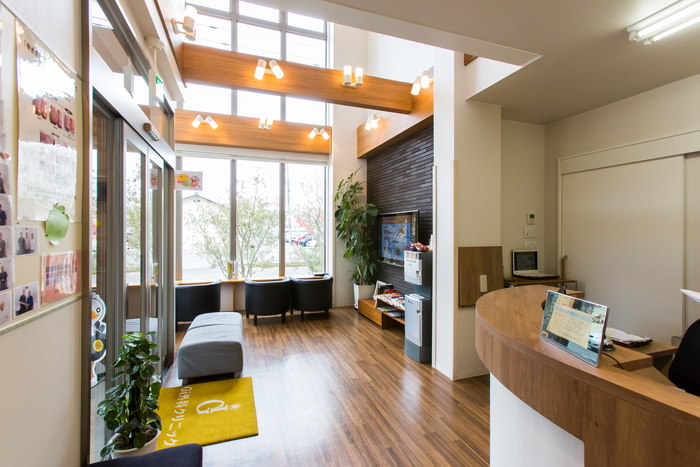
岡山院 院内写真


At Gi Surgical Clinic, as we establish our place in the world and clarify our purpose, continuing towards the future requires the unity and collaboration of our staff. We believe that sharing the following elements is crucial:

Management Philosophy:
We innovate in healthcare.
This represents our most important belief.

Mission:
To create a world where the best treatment for inguinal hernia is accessible anywhere in Japan.
This is the mission we carry.

Vision:
To expand Gi Surgical Clinic across Japan with 20 clinics.
This is the direction we aim for and the goal we strive to achieve.

Values:
All staff at Gi are family. We interact with each other with a constant sense of gratitude.
We firmly fulfill our responsibilities towards our families, our individual backbones.
We maintain high professional consciousness and motivation.
Growth is our most precious activity. We aim for greater heights than yesterday, today, and tomorrow.
We value challenges. There are no “failures,” only “experiences.”
High communication among staff is considered our greatest weapon.
The clinic is a business and makes maximum efforts to “survive.”
These are the values we cherish.
All our actions must always be based on the universal “conscience,” the “right path for humanity,” which we consider our absolute value or “righteousness.” We are convinced that this “righteousness” must be the source of all our activities and passed on at all times.

A clinic that honors “righteousness” – that is what we wish Gi Surgical Clinic to be.

Academic Presentation Achievements
Fiscal Year 2020
2020.9.16 Publication in the “National Library of Medicine”

Fiscal Year 2019
2019.5.24-25 The 17th Japan Hernia Society Academic Meeting

Fiscal Year 2018
2018.6.28-30 The 12th Japan Laparoscopic Hernia Surgery Technique Conference
2018.6.29-30 The 16th Japan Hernia Society
2018.12.6-8 The 31st Japan Society for Endoscopic Surgery

Fiscal Year 2017
2017.6.2-3 The 15th Japan Hernia Society
2017.12.7-9 The 30th Japan Society for Endoscopic Surgery

Fiscal Year 2016
2016.10.27-29 The 14th Japan Hernia Society
2016.11.12 The 29th Okayama City Medical Association Medical Conference
2016.11.24-26 The 78th Clinical Surgery Conference
2016.12.3 The 11th Kansai Hernia Study Group
2016.12.8-10 The 29th Japan Society for Endoscopic Surgery

Fiscal Year 2015
2015.9.19 The 7th Japan Laparoscopic Hernia Surgery Technique Conference
2015.11.14 The 28th Okayama City Medical Association Medical Conference
2015.12.10-12 The 28th Japan Society for Endoscopic Surgery
2015.11.26-28 The 77th Clinical Surgery Conference


Greeting

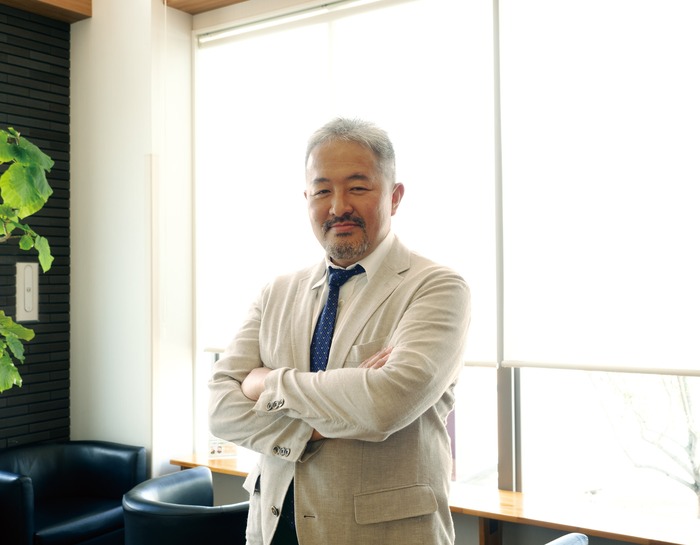
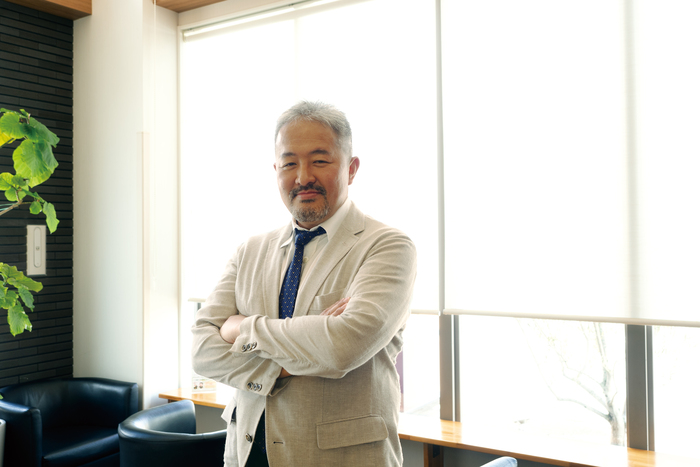
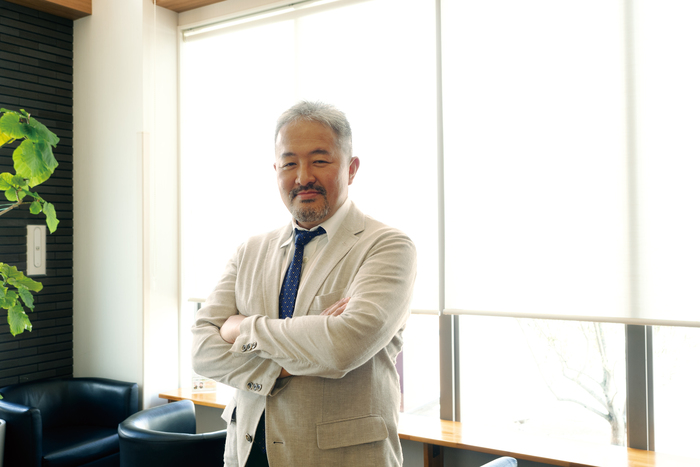
池田理事長スーツ笑顔


池田理事長スーツ笑顔

Throughout my career as a surgeon, I have dedicated myself fully to treating malignant diseases that require surgery as a last resort. I take pride in knowing that, in my own small way, my efforts have been a support in the lives of my patients. However, there are many benign diseases that can only be cured through surgery as well.

In reality, because they are benign, these conditions often become the focus of training for young surgeons, resulting in cases where complete recovery is not achieved or recurrences happen. On the other hand, benign conditions that are neglected due to their non-threatening nature, and the patients who suffer daily sacrifices because of them, do not receive enough attention. Additionally, the fixed notion that hospitalization is a given after surgery still strongly persists.

Is this really patient-centered care? What is true patient-centered care? In questioning this, based on my experience as a surgeon and through continuous innovation, I have mastered a surgical technique that is much safer, with minimal damage to the body and very low recurrence rates—the Single Incision Laparoscopic Surgery-Total Extraperitoneal (SILS-TEP) approach for inguinal hernia repair.

Drawing from my own experience of being hospitalized, I sought ways to complete treatment without the need for hospitalization if possible, leading me to the practice of outpatient surgery. I have decided that providing safe, minimally invasive surgery on an outpatient basis and offering medical care that integrates seamlessly into daily life is my mission, prompting me to open my own practice.

I aim to challenge and redefine the conventional wisdom of surgical care in a positive way, together with my staff, in pursuit of our ideals. I hope to create a clinic where patients feel relieved of their troubles, and find reliable care, expressing that they are glad they visited “Gi Surgical Clinic”.

Although we are a young clinic, we intend to utilize our past experiences to provide warm, humane, and understandable medical care. Together with my staff, we are committed to delivering medical care that earns the trust and peace of mind of everyone we serve. We kindly ask for your support and trust moving forward.


池田理事長スーツ笑顔


池田理事長スーツ笑顔


鼠径ヘルニア(脱腸)の嵌頓(かんとん)は何時間で危険?放置のリスクと受診の目安

まず結論です。
嵌頓(かんとん)は、短時間で危険な状態に進むことがあります。
鼠径部や陰のうのふくらみが戻らない、強い痛みがある、吐き気や嘔吐を伴う場合は、早めに医療機関へ相談してください。

嵌頓(かんとん)する前に早めに対応することで、より安全に治療できる可能性があります。

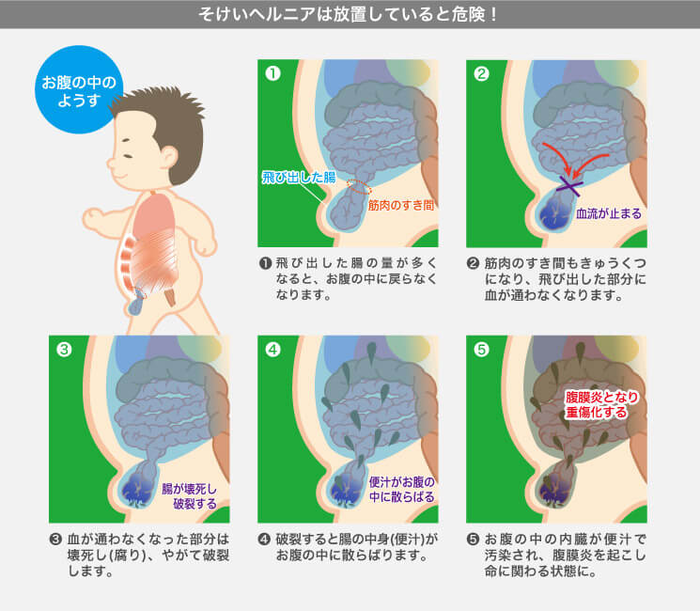
鼠径ヘルニア(脱腸)を放置していると、症状が悪化し、「嵌頓(かんとん)」という危険な状態になることがあります。

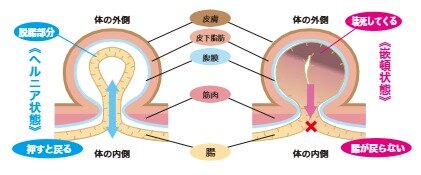
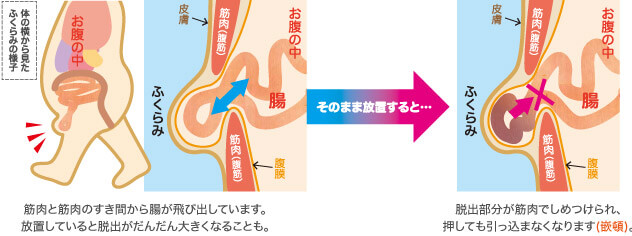
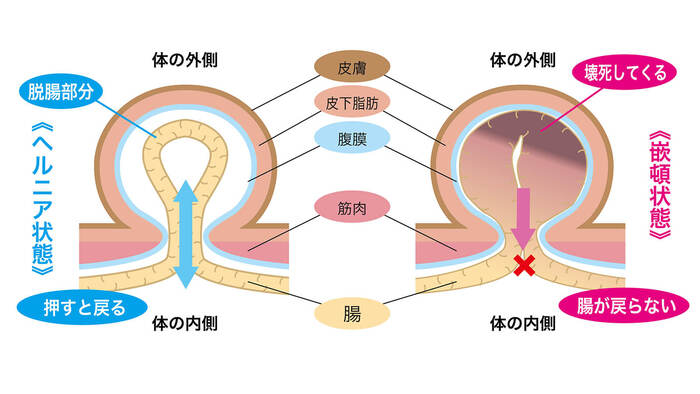
嵌頓とは、飛び出した腸が戻らなくなり、締め付けられてしまう状態です。

この状態が続くと、腸の血流が悪くなり、重症化する可能性があります。

では、嵌頓はどのくらいで危険な状態になるのでしょうか。
専門医が分かりやすく解説します。


鼠径ヘルニアとは?


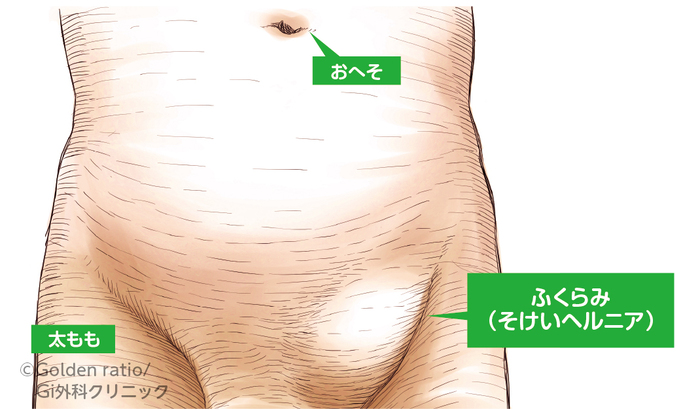
鼠径ヘルニア(脱腸)とは、足の付け根(鼠径部)の筋肉が弱くなり、腸などの内臓が外に飛び出してしまう状態です。

多くの場合、押すと戻る「ふくらみ」として気づきます。
(かかりつけの医師等に診断される方も多いです。)

参照元:Inguinal Hernia(National Institutes of Health)

嵌頓(かんとん)とはどんな状態か


嵌頓(かんとん)の状態は、図だけでなく動画の方がイメージしやすいです。
短い動画で解説しています。


嵌頓とは、飛び出した腸が元に戻らなくなり、そのまま締め付けられてしまう状態です。

この状態になると、

・腸の血流が悪くなる
・腸の働きが止まる
・炎症が起こる

などが起こり、注意が必要です。

参照元:Incarcerated Inguinal Hernia: What Is It, Diagnosis, and More

嵌頓の危険性


嵌頓が起こると、腸が締め付けられ、血流が悪くなります。

その結果、

・腸が壊死する(腐る)
・腸に穴があく
・お腹の中に炎症が広がる

といった状態に進む可能性があります。

そのため、嵌頓は早めの対応が重要です。

嵌頓になると、手術のリスクが大きく変わります

鼠径ヘルニアは、嵌頓になる前に行う予定手術と、嵌頓を起こしてからの緊急手術で、治療の負担やリスクが大きく異なります。

通常手術(嵌頓前)では死亡率は極めて低いとされていますが、嵌頓などで緊急手術となった場合、死亡率が約10%以上に上昇するという報告があります。

つまり、嵌頓になる前かどうかで、治療の負担やリスクが大きく変わる可能性があります。

※NCD(National Clinical Database:日本の手術データベース)の報告
具体的には
・腸閉塞
・腸管壊死
・緊急開腹手術
などを含む「重症緊急手術群”の死亡率」

特に血流障害が6時間以上続くと腸が壊死する可能性が高まるため、できるだけ早く治療する必要があります。

こんな症状が出たらすぐに救急受診を検討してください

鼠径ヘルニアの脱出した腸が「戻らない」「すごく痛い」 という症状が出たら、以下の点をチェックしてください。

  • 休んでも腫れが引かない
  • 激しい腹痛が続く
  • 吐き気や嘔吐がある
  • お腹が張って苦しい

このような症状がある場合は、早めの受診が必要です。

緊急手術で病院に運ばれた後の流れ


  • 医師による診察→手で戻せるか試みる  
  • 戻せなかった場合→ 緊急手術で壊死した腸を切除  
  • CT検査で腸の状態を確認  
  • 手術が必要な場合→1~2週間の入院  

「様子を見よう…」と考えるのは危険!

嵌頓を長時間放置すると、壊死した腸が破れて腹膜炎を起こすリスクがあり、命に関わる可能性もあります。

鼠経ヘルニアの治療について詳しく知りたい方はコチラ


まとめ

鼠径ヘルニアが脱出した腸が「戻らない」「すごく痛い」ときは、早めの受診が必要です。

  • 嵌頓が進行すると腸閉塞や腸壊死になり、緊急手術が必要になる  
  • 早めの処置が生死を分けることもあるため、自己判断せずすぐに病院へ  

鼠径ヘルニアを放置している方は、症状が軽いうちに手術を受けるのも選択肢のひとつです。  
いざという時に慌てないためにも、ぜひこの知識を覚えておいてください!

今回は「嵌頓(かんとん)について、危険な状態になるまでの時間は?」について解説しました。

鼠径部や陰のうのふくらみ、痛み、戻らない症状がある方は、受診予約ページもご確認ください。

鼠径ヘルニアに関する無料相談受付中!


気になる症状がある方は、お気軽にGi外科クリニックまでご相談ください。
専門の外科医が丁寧に対応いたします。

※この記事は「嵌頓 鼠径ヘルニア」のキーワードでの検索ニーズに応えるため、医師監修のもと作成しています。

LINEのお友達登録で鼠径ヘルニアの最新情報


LINEに追加いただくと、鼠径ヘルニアの危険度診断が簡単にできます。
この機会にぜひお試しください!

この記事を監修した人


日本外科学会専門医/日本外科学会指導医/日本消化器外科学会認定医/日本ヘルニア学会鼠径部ヘルニア習得医
年間1000人以上の鼠径ヘルニア手術を担当および監修。安全で体へのダメージや再発が非常に少ない術式〈単孔式腹腔鏡下鼠径(そけい)ヘルニア根治術(SILS-TEP法)〉を行う日本有数のドクター。
外科医向けの鼠径ヘルニア手術の教科書を多数執筆する他、主な著書に『1日で治せる 鼠径ヘルニア読本』 合同出版/2024年2月刊/『ヘルニアの外科』(共著) 南江堂/2024年10月刊などがある。

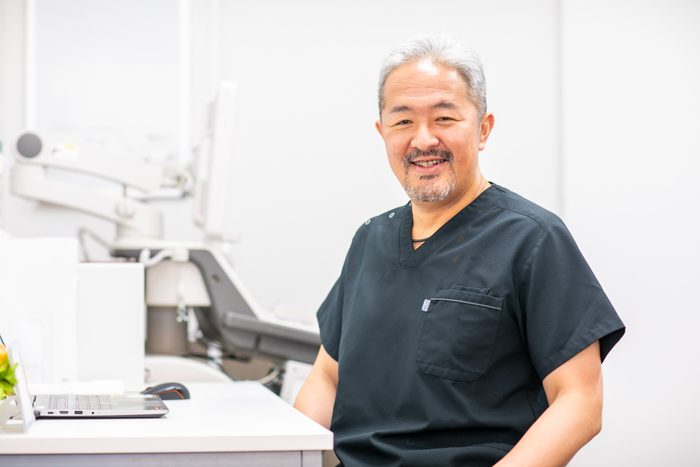
Gi外科クリニック理事長・医師 池田 義博

Gi外科クリニックへご相談ください

鼠径ヘルニア専門クリニック「Gi外科クリニック」では、岡山院(岡山市)、京都院(京都市四条烏丸)、阪神院(西宮市西宮北口)で中四国、関西を中心に鼠径ヘルニアの患者さんを治療しています。

鼠径ヘルニアという病気は、放置しておくと時に命に危険が及ぶ「嵌頓(かんとん)」を起こす可能性があります。
そのため、鼠径ヘルニアの症状がある場合は痛みの有無に関わらず、早期治療をおすすめします。

鼠径ヘルニアの症状がある方はお気軽に当院を受診ください。

受診予約はこちらから

24時間365日受付中!

また受診はためらうけど症状が気になる方のための無料相談窓口も設けています。
無料相談窓口では、鼠径ヘルニアに詳しい当院の看護師がご対応致します。

気になることがございましたら、お気軽にご相談ください。

そけいヘルニア無料相談ダイヤル

通話無料
携帯OK

0120-373-615

受付時間/9:00〜18:00
(月曜〜金曜・土日を除く祝日)

鼠径ヘルニアを放置するとどうなる?


こんにちは!Gi外科クリニックです。
今日のテーマは、「鼠径ヘルニアを放置するとどうなる?」
鼠径ヘルニアは手術でしか治すことはできません。
今回は、鼠径ヘルニアを手術せずに放置するリスクについて、わかりやすく解説したいと思います。

嵌頓(かんとん)

鼠径ヘルニアとは、腹部臓器が腹壁の弱い部分から飛び出してしまう状態を指します。
これが放置されると、さまざまなリスクや危険性があります。


まず、ヘルニアが「嵌頓(かんとん)」するリスクがあります。
これは、ヘルニアが飛び出した臓器(腸管など)が腹壁の中で閉じ込められてしまい、元に戻せなくなる状態を指します。
これが起こると、腸が閉塞し、吐き気や嘔吐、腹痛、鼠径部に痛みを伴うしこりができるなどの症状が現れることがあります。

絞扼ヘルニア

さらに深刻なのが「絞扼ヘルニア」です。
これは、嵌頓したヘルニア内容である腸管の血流が遮断され、組織が壊死してしまう可能性がある状態です。
この状態は、非常に危険で、腹膜炎を引き起こして命に関わる緊急事態となります。
絞扼ヘルニアの症状には、激しい痛み、皮膚の赤みや紫色、発熱、心拍数の増加、吐き気や嘔吐が含まれ、すぐに医療機関を受診する必要があります。

まとめ

手術を選択しない場合、これらのリスクが高まり、将来的により難易度が高い手術が必要になる可能性があります。
ヘルニアは時間とともに大きくなり、症状が悪化することが一般的です。
そのため、ヘルニアの症状がある場合や、大きくなっている場合には、専門医と相談し、適切な治療法を選択することが大切です。

LINEのお友達登録で鼠径ヘルニアの最新情報


LINEに追加いただくと、鼠径ヘルニアの危険度診断が簡単にできます。
この機会にぜひお試しください!

Gi外科クリニックへご相談ください

鼠径ヘルニア専門クリニック「Gi外科クリニック」では、岡山院(岡山市)、京都院(京都市四条烏丸)、阪神院(西宮市西宮北口)で中四国、関西を中心に鼠径ヘルニアの患者さんを治療しています。

鼠径ヘルニアという病気は、放置しておくと時に命に危険が及ぶ「嵌頓(かんとん)」を起こす可能性があります。
そのため、鼠径ヘルニアの症状がある場合は痛みの有無に関わらず、早期治療をおすすめします。

鼠径ヘルニアの症状がある方はお気軽に当院を受診ください。

受診予約はこちらから

24時間365日受付中!

また受診はためらうけど症状が気になる方のための無料相談窓口も設けています。
無料相談窓口では、鼠径ヘルニアに詳しい当院の看護師がご対応致します。

気になることがございましたら、お気軽にご相談ください。

そけいヘルニア無料相談ダイヤル

通話無料
携帯OK

0120-373-615

受付時間/9:00〜18:00
(月曜〜金曜・土日を除く祝日)

放置はNG?鼠径ヘルニアの深刻な結末


こんにちは!Gi外科クリニックです。
今日のテーマは、「放置はNG?鼠径ヘルニアの深刻な結末」
鼠径ヘルニアは手術でしか治すことはできません。
今回は、鼠径ヘルニアを放置しているどうなるか?わかりやすく解説したいと思います。

鼠径ヘルニアを放置していると…?

鼠径ヘルニアを治療しない選択をすると、いくつかの深刻なリスクや合併症につながる可能性があります。
小さなヘルニアは重大な症状を引き起こさないかもしれませんが、時間とともにヘルニアが大きくなると、不快感や痛み、日常活動への制限が増加します。
ヘルニアが大きくなればなるほど、将来的に手術を選択した場合に、その手術はより複雑で困難になります。

嵌頓(かんとん)のリスク


ヘルニアを治療しないことの重大なリスクの一つに、ヘルニアが嵌頓(かんとん)する可能性があります。
これは脱出した臓器がヘルニアの穴にはまって、腹部に戻すことができなくなる状態を指します。
これにより腸閉塞が発生し、ガスや便が通過できなくなり、重度の腹痛、吐き気、嘔吐などの症状を引き起こすことがあります。

絞扼ヘルニアのリスク

さらに懸念されるのは、絞扼ヘルニアのリスクです。
これは、ヘルニア内の腸のループが閉じ込められ、血液供給が遮断された状態です。
これは組織の壊死を防ぐために緊急手術が必要な緊急事態です。
絞扼ヘルニアの症状には、激しい痛み、ヘルニア部位の赤み、発熱、急激な心拍数の上昇が含まれます。

まとめ

これらのリスクを考慮すると、特にヘルニアが症状を引き起こしている場合やサイズが大きくなっている場合には、外科的修復を検討することが一般的に推奨されます。
現代の外科技術、特に腹腔鏡手術やロボット支援手術などの低侵襲手術は、小さな切開を使用し、手術後の痛みの少なさ、日常活動への早期復帰を提供します。

したがって、小さく無症状のヘルニアを持つ人々にとっては経過観察が選択肢となる場合もありますが、ヘルニアのサイズや症状を定期的に確認し、ヘルニアの状態や症状の変化があった場合は早期の治療が必要です。

LINEのお友達登録で鼠径ヘルニアの最新情報


LINEに追加いただくと、鼠径ヘルニアの危険度診断が簡単にできます。
この機会にぜひお試しください!

Gi外科クリニックへご相談ください

鼠径ヘルニア専門クリニック「Gi外科クリニック」では、岡山院(岡山市)、京都院(京都市四条烏丸)、阪神院(西宮市西宮北口)で中四国、関西を中心に鼠径ヘルニアの患者さんを治療しています。

鼠径ヘルニアという病気は、放置しておくと時に命に危険が及ぶ「嵌頓(かんとん)」を起こす可能性があります。
そのため、鼠径ヘルニアの症状がある場合は痛みの有無に関わらず、早期治療をおすすめします。

鼠径ヘルニアの症状がある方はお気軽に当院を受診ください。

受診予約はこちらから

24時間365日受付中!

また受診はためらうけど症状が気になる方のための無料相談窓口も設けています。
無料相談窓口では、鼠径ヘルニアに詳しい当院の看護師がご対応致します。

気になることがございましたら、お気軽にご相談ください。

そけいヘルニア無料相談ダイヤル

通話無料
携帯OK

0120-373-615

受付時間/9:00〜18:00
(月曜〜金曜・土日を除く祝日)

鼠径ヘルニア修復:手術の選択肢


こんにちは!Gi外科クリニックです。
今日のテーマは、「鼠径ヘルニア修復:手術の選択肢」
鼠径ヘルニアは手術でしか治すことはできません。
今回は、鼠径ヘルニアの手術についてわかりやすく解説したいと思います。

鼠径ヘルニアの手術

鼠径ヘルニアは、腹部の組織が腹壁の弱い部分から飛び出してしまう状態を指します。
治療方法には主に2つの手術方法があります。
「開腹手術」と「低侵襲手術」です。


開腹手術

開腹手術は、局所麻酔と鎮静剤、または全身麻酔のもとで行われます。
この手術では、鼠径部に切開を入れ、飛び出した組織を腹腔内に戻します。
その後、弱くなった部分を縫合したり、メッシュを用いて補強します(ヘルニア修復術)。]
手術後は早期離床が奨励されますが、日常生活に復帰するまでに数週間かかる場合があります​​。

低侵襲手術

低侵襲手術には、腹腔鏡手術とロボット支援手術があります。
全身麻酔で行います。
腹部に小さな切開を複数か所入れ、ガスを用いて腹部を膨らませた状態で行います。
外科医は腹腔鏡(カメラ)を見ながら手術を進め、メッシュを用いてヘルニアを修復します。
この手術法の患者は、手術後の痛みが少なく、日常生活への復帰が早いことが特徴です。
腹腔鏡手術と開腹手術の長期的な結果は同等とされています​​​​​​​​。

まとめ

鼠径ヘルニアの治療に関しては、症状の有無やヘルニアの大きさ、患者の健康状態や以前に行った手術の有無など、個々の状況に応じて適切な治療法が選択されます。
特に、ヘルニアが痛みを伴う場合や大きくなっている場合は、重篤な合併症を防ぐために手術が必要になることが多いです。
手術を検討している場合は、医師と相談して、リスクと利益を十分に理解した上で最適な選択を行ってください。

LINEのお友達登録で鼠径ヘルニアの最新情報


LINEに追加いただくと、鼠径ヘルニアの危険度診断が簡単にできます。
この機会にぜひお試しください!

Gi外科クリニックへご相談ください

鼠径ヘルニア専門クリニック「Gi外科クリニック」では、岡山院(岡山市)、京都院(京都市四条烏丸)、阪神院(西宮市西宮北口)で中四国、関西を中心に鼠径ヘルニアの患者さんを治療しています。

鼠径ヘルニアという病気は、放置しておくと時に命に危険が及ぶ「嵌頓(かんとん)」を起こす可能性があります。
そのため、鼠径ヘルニアの症状がある場合は痛みの有無に関わらず、早期治療をおすすめします。

鼠径ヘルニアの症状がある方はお気軽に当院を受診ください。

受診予約はこちらから

24時間365日受付中!

また受診はためらうけど症状が気になる方のための無料相談窓口も設けています。
無料相談窓口では、鼠径ヘルニアに詳しい当院の看護師がご対応致します。

気になることがございましたら、お気軽にご相談ください。

そけいヘルニア無料相談ダイヤル

通話無料
携帯OK

0120-373-615

受付時間/9:00〜18:00
(月曜〜金曜・土日を除く祝日)

受診予約をする LINEで診断